
Urban space is no longer shaped only by concrete, zoning maps, and public committees. It is increasingly organized by apps, dashboards, sensors, ranking systems, and real-time pricing engines. A digital platform can turn a quiet residential curb into a delivery zone, a parking spot into a micromobility hub, a living room into a short-term rental, and a neighborhood café into a remote-work office. These shifts are not merely technical conveniences. They are acts of spatial redistribution. When a platform changes who can access a place, when they can access it, and under what conditions, it is effectively reallocating urban space.
This article examines how digital platforms reallocate urban space, why this matters for cities, and what governments, residents, and businesses can do to ensure that the result is fair, productive, and sustainable. The core argument is simple: platform-mediated reallocation can improve efficiency and expand choice, but without public oversight it can also deepen inequality, privatize shared assets, and weaken democratic control over the city.
From Master Plans to Real-Time Allocation
Traditional urban planning works through long time horizons. Master plans, zoning codes, building permits, and infrastructure budgets define what can happen where. These tools are slow, political, and often rigid, but they are also public. Residents can attend hearings, comment on proposals, and challenge decisions. The process may be messy, yet it creates a visible record of how a city intends to distribute space and opportunity.
Digital platforms introduce a different logic. They allocate space continuously rather than periodically. A ride-hailing algorithm decides which streets are worth serving at 2 a.m. A delivery app determines which restaurants can reach customers within a thirty-minute window. A short-term rental platform converts housing into tourist accommodation based on demand signals. A coworking app identifies underused cafés and libraries as informal offices. These decisions are made in code, often far from city hall, and they can change from hour to hour.
The result is a hybrid city. Physical infrastructure still matters, but access to it is mediated by digital systems. A curb may be legally public, yet practically reserved for app users who can pay a dynamic fee. A public square may be open to all, yet socially filtered by reservation apps, influencer geotags, and private security. A bus stop may exist, but a platform’s routing map may steer thousands of users away from it. Space is no longer just a container; it is a negotiated service.
What Counts as Urban Space?
To understand platform reallocation, it helps to distinguish several layers of urban space.
A. Physical space includes streets, sidewalks, plazas, parks, buildings, and transit stations.
B. Temporal space refers to time slots: morning loading zones, evening restaurant patios, late-night delivery windows.
C. Social space involves who feels welcome, who is visible, and who is excluded.
D. Data space includes digital representations such as maps, ratings, demand heatmaps, and user profiles.
E. Economic space covers rents, fees, wages, licenses, and revenue flows.
F. Regulatory space consists of rules, permits, contracts, and enforcement mechanisms.
Digital platforms often reallocate all six layers at once. For example, a food delivery platform may claim a physical curb for scooters, a temporal window for pickups, a social space for gig workers, a data space of restaurant rankings, an economic space of commissions, and a regulatory space of terms-of-service agreements. Because these layers are interconnected, a change in one can ripple through the others.
The New Intermediaries of the Street
Platforms position themselves as neutral intermediaries. They connect drivers with riders, hosts with guests, workers with tasks, and consumers with goods. In practice, they also become gatekeepers. They decide which areas are served, which workers are matched, which businesses are promoted, and which users are trusted. This gatekeeping power is a form of spatial governance.
Consider ride-hailing. The platform does not own the roads, but it influences traffic patterns, pickup locations, and even curbside activity. It may concentrate vehicles in popular districts while leaving peripheral neighborhoods with longer waits. It may encourage drivers to cruise instead of park, adding congestion and emissions. It may also fill gaps where public transit is weak, especially at night or in low-density areas. The same platform can be both a substitute for and a competitor to public infrastructure.
Consider delivery. The rise of online ordering has transformed storefronts into micro-fulfillment nodes. Restaurants, groceries, and pharmacies now depend on couriers who wait on sidewalks, cluster near entrances, and navigate apartment buildings. Streets designed for pedestrians and parked cars must now accommodate a constant flow of two-wheelers and app-based workers. In some cities, entire blocks have become informal logistics hubs, with designated waiting areas, phone-charging stations, and package lockers appearing almost overnight.
Consider short-term rentals. A platform can convert long-term housing into tourist accommodation without constructing a single new building. This reallocates residential space to visitors, often in the most desirable neighborhoods. It can support local income and tourism spending, but it can also reduce housing supply, raise rents, and change the character of a community. The platform does not need to own the building; it only needs to control the booking channel.
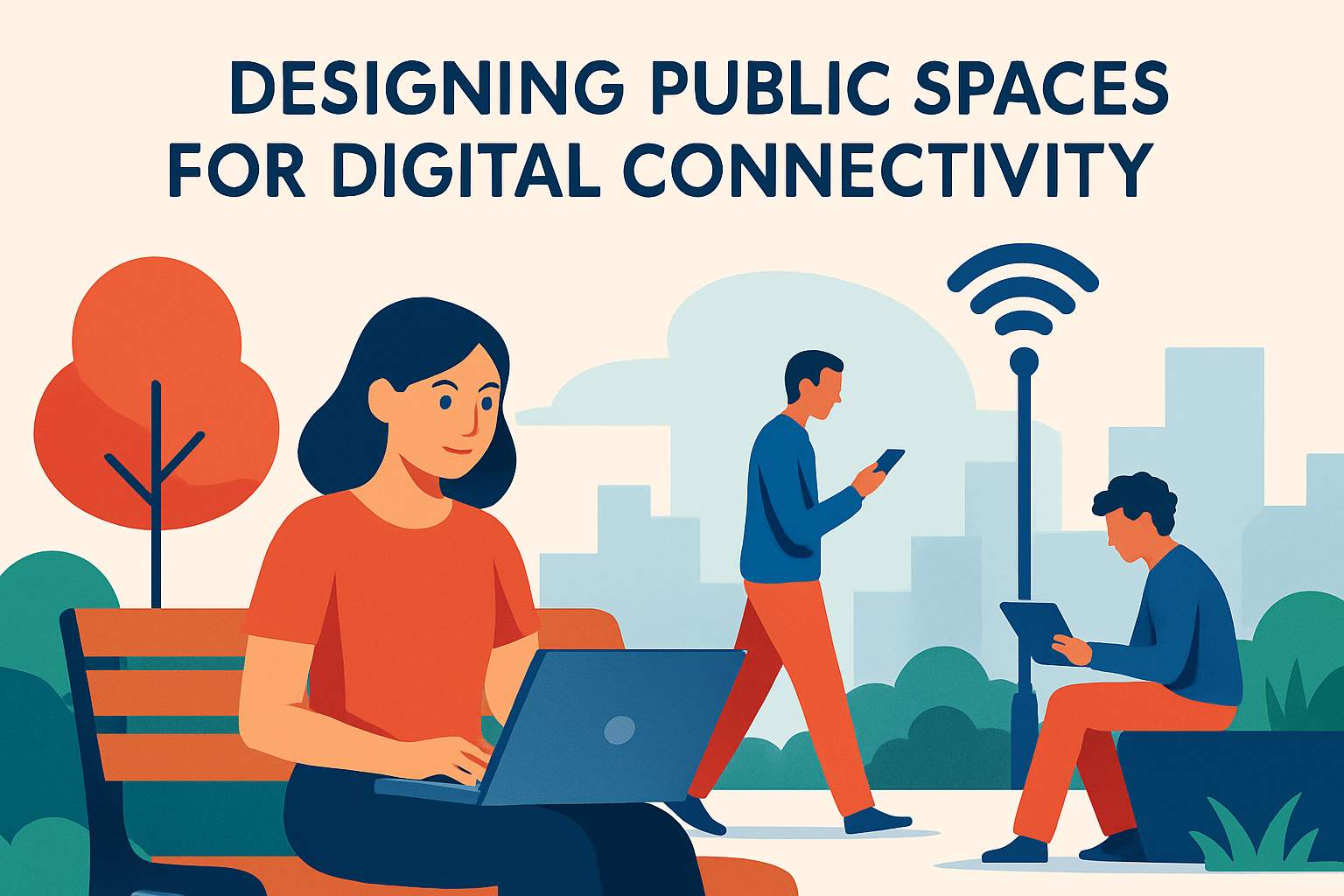
Consider coworking and remote work. Cafés, libraries, hotel lobbies, and even public parks become workspaces when apps list them as available. This can activate underused spaces and support local businesses, but it can also displace people who relied on those places for other purposes. A quiet library becomes a de facto office; a neighborhood café becomes a meeting room; a park bench becomes a desk. The platform reallocates comfort, quiet, and access.
The Curb as a Contested Asset
The curb is one of the most visible battlegrounds for platform reallocation. Once a simple strip for parking and loading, it now serves ride-hailing pickups, delivery drop-offs, micromobility parking, outdoor dining, bus stops, fire hydrants, and accessibility needs. Cities are experimenting with curb management systems that use sensors, apps, and dynamic pricing to allocate this scarce space.
A fair curb management framework should follow several principles, ordered here from A to L:
A. Access rights should be clearly defined for each user group.
B. Bus and emergency access must remain protected.
C. Commercial loading should be time-bound and priced fairly.
D. Data on curb use should be shared with public agencies.
E. Equity should be measured across neighborhoods, not just downtown.
F. Feedback from residents and workers should shape rule changes.
G. Geofencing can keep scooters and bikes out of no-parking zones.
H. Hourly pricing can reflect demand without excluding essential users.
I. Inclusion means considering disabled travelers, older adults, and low-income commuters.
J. Jurisdiction must be clear among city, county, and state agencies.
K. Key performance indicators should track congestion, safety, and access.
L. Legal enforcement should be consistent and transparent.
When these principles are ignored, the curb becomes a first-come, first-served marketplace where the highest bidder or most aggressive app wins. When they are applied, the curb can become a shared asset that supports many modes of movement and commerce.
Mobility, Algorithms, and the Shape of the City
Mobility platforms do more than move people. They shape demand. A routing algorithm can make one street faster and another slower. A surge-pricing zone can make a neighborhood feel distant. A geofenced scooter zone can define which areas are “serviced” and which are “unserved.” These decisions influence where businesses locate, where people search for housing, and where public investment seems justified.
Algorithmic mobility can also produce feedback loops. If a platform directs more riders to a popular district, that district becomes more attractive. More attractions mean more riders. More riders mean more vehicles. More vehicles mean more congestion. Eventually, the city may respond with new lanes, new fees, or new restrictions, which then reshape platform behavior again. The city and the platform co-produce space in an ongoing loop.
This loop is not inherently bad. It can help cities identify unmet demand, optimize transit connections, and reduce private car ownership. But it must be governed. If only the platform sees the full picture, public agencies are left reacting to data they cannot access. If only the city sees the full picture, platforms may resist rules that threaten their business model. The better path is shared data, shared standards, and shared accountability.
Housing, Work, and the Micro-Geography of Platforms
Platforms reallocate urban space not only on streets but inside buildings. A spare room becomes a hotel. A kitchen becomes a delivery-only restaurant. A living room becomes a coworking lounge. A garage becomes a micro-warehouse. These changes can create income and flexibility, especially for households facing high costs. They can also erode housing security and labor standards.
Short-term rentals are a clear example. In tourist-heavy districts, platforms can turn apartments into de facto hotels. This reduces the supply of long-term homes and can push residents farther from jobs, schools, and support networks. Some cities have responded with registration requirements, night limits, primary-residence rules, and platform data-sharing mandates. Others have invested in affordable housing and tenant protections. The most effective approaches combine regulation with supply-side policies, because restricting platform rentals alone cannot solve a housing shortage.
Gig work is another example. Delivery couriers, ride-hailing drivers, and task workers rely on public space for waiting, charging, eating, and resting. Yet they are often treated as invisible or unwanted. Cities can improve conditions by providing rest areas, bathrooms, shaded waiting zones, and clear pickup rules. Platforms can improve conditions by paying for waiting time, providing insurance, and sharing data on hotspot locations. Workers themselves should have a voice in designing these systems.
Public Space and the Risk of Privatization
Public space is supposed to be open, inclusive, and governed by public rules. Platform reallocation can quietly privatize it. A plaza may require a reservation through an app. A park may become a paid event venue. A sidewalk may be dominated by app-based vendors. A beach may be marketed through a private booking platform. These changes can generate revenue and activity, but they can also exclude people who cannot pay, do not have smartphones, or do not fit the platform’s desired user profile.
The risk is not that all platform use of public space is bad. Food trucks, pop-up markets, and outdoor performances can enliven streets. The risk is that public space becomes a product to be optimized rather than a right to be shared. Cities should set clear limits: which spaces can be booked, for how long, at what price, and with what community benefits. They should also protect free, unmediated access to essential places such as parks, libraries, and transit stations.
Data Governance and Spatial Justice

Every platform reallocation depends on data. Location data, payment data, ratings, search queries, and movement patterns are used to decide who gets what. If this data is incomplete or biased, the resulting allocation will be unjust. For example, if a neighborhood has fewer smartphone users, it may appear to have less demand. If a group is underrated by drivers or hosts, it may face longer waits or fewer options. If an area is over-policed, its residents may be more likely to be flagged by risk algorithms.
Spatial justice requires more than equal access to apps. It requires equal influence over the rules. Communities should be able to see how platform decisions affect their neighborhoods. They should be able to challenge data-driven decisions that harm them. They should be able to propose alternatives. This means open data standards, independent audits, community review boards, and meaningful consultation with affected groups.
Data governance should also address privacy. Platforms often collect far more information than they need to provide a service. Cities should require data minimization, purpose limitation, and strong security. They should avoid creating surveillance systems that track residents in the name of efficiency. The goal is not to stop data collection altogether, but to ensure that data serves public values rather than replacing them.
Economic Benefits and Hidden Costs
Platforms can generate real economic benefits. They can help small businesses reach more customers. They can create flexible income opportunities. They can make better use of existing assets, from spare rooms to idle cars. They can reduce the need for parking, increase transit ridership, and support local tourism. In some cases, they can revitalize commercial districts by bringing new activity to underused spaces.
But these benefits come with hidden costs. Congestion, emissions, and road wear may be shifted onto the public. Labor protections may be weakened. Housing affordability may decline. Small businesses may become dependent on platforms that charge high commissions. Tax revenue may be lost when transactions occur across borders. Public space may be degraded by constant commercial use. These costs are often borne by residents who did not choose the platform and cannot easily opt out.
A balanced approach recognizes both sides. Cities should not ban platforms outright, nor should they surrender to them. They should negotiate. They should set fees that reflect the true cost of platform activity. They should require data sharing so that public agencies can plan effectively. They should protect workers, tenants, and pedestrians. They should invest in public alternatives, such as good transit, public broadband, and community spaces.
Regulatory and Planning Responses
Cities around the world are experimenting with new rules. Some require ride-hailing companies to share trip data. Some cap short-term rentals in residential buildings. Some charge delivery platforms for curb use. Some create licensing systems for micromobility. Some establish public-private partnerships for mobility hubs. Some use participatory budgeting to let residents decide how platform revenue is spent.
Effective regulation tends to share several features. It is transparent, so residents can understand the rules. It is proportional, so it targets real harms without crushing innovation. It is adaptive, so it can change as technology evolves. It is enforceable, with clear penalties and sufficient staff. It is collaborative, involving platforms, workers, businesses, and communities. And it is grounded in a vision of the city as a shared resource, not just a marketplace.
Design Principles for Platform-Reallocated Cities
To guide future decisions, policymakers and platform designers can adopt a set of principles. The following list is ordered from A to K:
A. Accountability should be built into every algorithm that allocates space.
B. Benefit-sharing should ensure that public assets generate public value.
C. Competition should be fair among platforms, small businesses, and public operators.
D. Data should be open, standardized, and privacy-protective.
E. Equity should be a primary metric, not an afterthought.
F. Flexibility should allow cities to adapt rules as conditions change.
G. Governance should include residents, workers, and marginalized groups.
H. Housing and livelihood protections should be integrated into platform policy.
I. Inclusion should ensure that non-digital users are not left behind.
J. Justice should guide enforcement, so penalties fall on harmful actors, not vulnerable ones.
K. Knowledge-sharing should help cities learn from one another.
These principles are not abstract ideals. They can be translated into concrete tools: licensing conditions, data-sharing agreements, curb pricing schedules, rental registries, worker standards, community benefit agreements, and public dashboards. The key is to treat platform reallocation as a planning issue, not just a technology issue.
Future Scenarios
The future of platform-reallocated urban space is not predetermined. Three scenarios illustrate the range of possibilities.
A. Cooperative city: Platforms operate under public-interest rules, share data, and co-invest in shared infrastructure. Residents have a strong voice, and the benefits of digital allocation are widely distributed.
B. Platform municipalism: Cities build their own platforms for mobility, delivery, and space booking. Public agencies compete with private companies, setting standards by example.
C. Privatized city: Platforms dominate access to streets, housing, work, and public space. Those who can pay enjoy seamless service, while others face exclusion, surveillance, and decline.
The cooperative and municipal scenarios require political will, technical capacity, and sustained public engagement. The privatized scenario can emerge by default if cities fail to act. The choice is not between innovation and regulation. It is between innovation that serves the many and innovation that serves the few.
Conclusion

Digital platforms are reallocating urban space in profound and often invisible ways. They decide which streets are served, which buildings are used for what, which workers are visible, and which residents are included. These decisions can make cities more efficient, flexible, and responsive. They can also make cities more unequal, exclusionary, and commercialized. The outcome depends on governance.
Cities need to see platforms not as neutral tools but as spatial actors. They need to negotiate terms, require transparency, protect public assets, and invest in alternatives. Platforms need to recognize that long-term success depends on trust, fairness, and shared value. Residents need to be treated as participants, not just users. If these conditions are met, digital platforms can help reallocate urban space in ways that expand opportunity rather than narrow it. If they are ignored, the city risks becoming a private service for those who can pay, while the public realm erodes around them.