
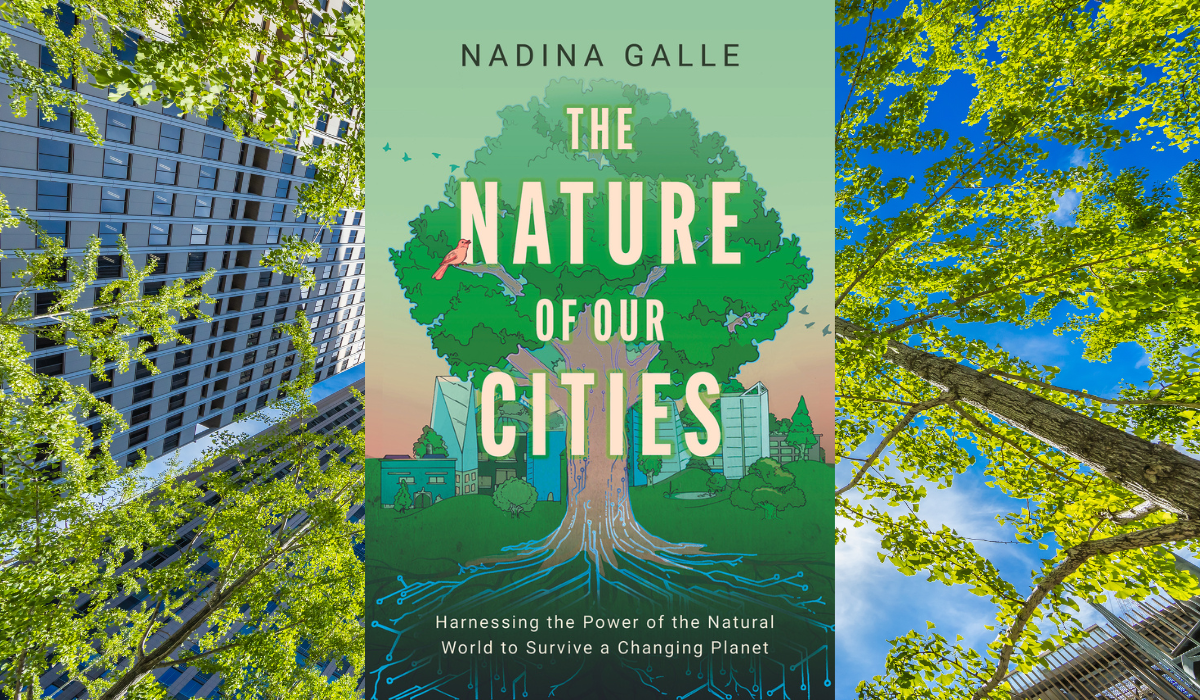
Cities have always been complex organisms. They breathe through transportation networks, circulate resources through infrastructure systems, and sustain themselves through the labor and creativity of their inhabitants. But a profound transformation is underway. Digital technologies are not merely being added to urban environments as tools; they are fundamentally reshaping how cities function, how nature operates within them, and how we understand the relationship between the two. The journal Nature Cities has dedicated significant attention to this intersection, particularly through its September 2026 Focus issue titled “Technology and Urban Nature,” which brings together researchers across disciplines to examine how technological innovation is creating new possibilities and new challenges for understanding and engaging with nature in cities.
This article explores the multifaceted ways in which technology is rewriting the rules of urban nature. From environmental DNA sequencing that reveals invisible biodiversity to generative AI that models urban futures, from self-healing concrete that blurs the boundary between the built and the biological to algorithmic governance that raises urgent questions about equity and public space, the technological transformation of urban nature represents both an extraordinary opportunity and a profound responsibility.
The Digitization of Urban Ecosystems
Urban nature from street trees and parks to soils, waterways, and the organisms they support is crucial to sustainable and livable cities. Yet for much of urban history, this nature has been understood through direct human observation: the color of leaves, the presence of birds, the quality of water. The digital era has changed this fundamentally. As the editors of Nature Cities observe, these living systems are increasingly “coded through digital technologies,” with new forms of knowledge emerging to decode complex ecological processes and guide urban environmental management.
This coding takes multiple forms. Sensors embedded in urban environments continuously monitor air quality, soil moisture, temperature, and biodiversity indicators. Satellite imagery provides synoptic views of urban expansion and vegetation health. Mobile applications allow citizens to report wildlife sightings and environmental conditions. Together, these technologies create what researchers Maalsen, Marvin, and Dowling term “digital technonatures”—digitally mediated systems that transform urban environments into continuously sensed and modulated ecologies, reshaping how nature is produced, governed, and contested in cities.
The concept of digital technonatures captures something essential about the contemporary urban condition. Nature in cities is no longer simply “out there,” separate from human technology. It is increasingly entangled with digital systems that monitor, model, and manage it. A park is not just a park; it is a data-generating ecosystem. A river is not just a river; it is a monitored waterway with sensors tracking pollution levels and flow rates. This entanglement creates new possibilities for understanding and managing urban nature, but it also raises important questions about power, access, and the values embedded in technological systems.
The Promise and Peril of Environmental DNA
One of the most striking technological developments reshaping urban ecology is the use of environmental DNA (eDNA) genetic material collected from environmental samples such as soil, water, and air. As Matthew Gandy argues in a Nature Cities Perspective, eDNA and associated techniques are transforming urban ecology and its conception of cities. By sequencing DNA found in environmental samples, researchers can identify the presence of species without directly observing them, revealing biodiversity at ecosystem scales that would otherwise remain invisible.
Gandy’s work emphasizes that eDNA is not merely a technical tool but a conceptual shift. It reframes biodiversity as a series of DNA inventories, marking a notable shift in how nature is conceptualized. This shift has profound implications for urban environmental management. Cities can now monitor biodiversity in ways that were previously impossible, tracking the presence of endangered species, detecting invasive organisms, and assessing the health of ecosystems through the genetic material they shed.
However, Gandy also raises critical questions about what bioinformatic approaches foreground or obscure in the production of ecological knowledge. DNA sequencing itself forms part of the impetus toward emerging biotechnology-driven patterns of urbanization, with cities like Cambridge, Copenhagen, San Diego, and Shenzhen becoming hubs for genomic research and application. The risk is that an overemphasis on genetic data may obscure the social, historical, and political dimensions of urban nature. To address this, Gandy advocates for “forensic ecologies” a post-positivist conceptual synthesis that reconnects genomic data with the social and historical realities of cities.
The eDNA revolution is not confined to academic research. A recent study by Sun Xin and colleagues at the Chinese Academy of Sciences used soil eDNA techniques to investigate soil biodiversity and homogenization effects across 13 Chinese cities and four land-use types, published in Nature Cities in August 2025. This large-scale application demonstrates how eDNA is becoming an operational tool for urban ecological management, capable of revealing patterns that would be invisible to traditional survey methods.
Generative AI and the Future of Urban Planning
If eDNA represents a new way of reading urban nature, generative artificial intelligence represents a new way of writing it. A major review published in Nature Cities in 2026, led by researchers from Tsinghua University in collaboration with MIT, University College London, the University of Chicago, and other institutions, explores how generative AI is reshaping urban science and practice.
The review’s central insight is that cities are changing faster than the tools used to understand them. A new generation of AI can synthesize images, model aspects of human behavior, and reason across heterogeneous data capabilities that are beginning to reshape how researchers and practitioners observe, model, and support decisions about urban life. The authors propose a framework of “simulation evaluation context validation human-centered deployment” to examine generative AI’s applications in urban perception, modeling, and decision-making.
Generative AI offers several concrete capabilities for urban nature and planning:
A. Synthetic imagery generation: AI models can generate realistic images of urban scenarios, allowing planners to visualize the potential impacts of green infrastructure, tree planting, or water management interventions before implementation.
B. Behavioral modeling: Generative models can simulate how different populations might use and interact with urban nature, from park visitation patterns to responses to environmental policies.
C. Heterogeneous data reasoning: AI can integrate and reason across diverse data sources satellite imagery, sensor networks, social media, census data to produce holistic understandings of urban ecosystems.
D. Automated planning support: Large language models can assist with complex planning tasks, from zoning analysis to environmental impact assessment, potentially democratizing access to sophisticated analytical tools.
The review is careful, however, to emphasize that the value of generative AI depends less on technical novelty than on whether it can be evaluated honestly, validated in context, and deployed in ways that keep human judgment and accountability at the center. The risk of uncritical adoption is significant: AI models trained on biased data can perpetuate or exacerbate existing inequalities, and the apparent sophistication of AI-generated outputs can lend unwarranted authority to flawed analyses.
Algorithmic Governance and the Contestation of Urban Space
The digital transformation of urban nature is inseparable from broader questions of governance. As life-service digital platforms increasingly reallocate urban space through routing, dispatching, and rebalancing algorithms that prioritize commercial throughput over broader public interests, cities face urgent questions about who controls shared urban space and according to what values.
Research by Liao and colleagues, published as a Comment in Nature Cities, argues that cities need proactive algorithmic governance to safeguard spatial control over shared urban space. The concern is not merely that algorithms may make mistakes, but that they encode particular logics commercial efficiency, profit maximization that may conflict with public values such as equity, accessibility, and environmental sustainability. When a ride-hailing algorithm routes vehicles through a quiet residential street to optimize travel time, it is making a decision about how urban space should be used, even if no human explicitly makes that choice.
This issue extends beyond transportation. Digital platforms for food delivery, short-term rentals, and other services are reshaping urban economies and spatial patterns in ways that have significant environmental implications. The proliferation of delivery vehicles, the conversion of residential space to tourist accommodation, and the concentration of commercial activity in algorithmically favored locations all represent forms of algorithmic governance that operate largely outside traditional planning frameworks.
Gao Quan’s research on “Algorithms and Informal Urbanism” in Nature Cities examines how digital technologies, particularly platform economies, systematically restructure urban informal spaces. Using the case study of Shipai Village in Guangzhou, the research reveals how algorithms reshape the economic and spatial organization of informal settlements, with implications for the residents who depend on these spaces for livelihood and community.
Self-Healing Infrastructure and the Blurring of Boundaries

One of the most innovative frontiers in urban technology is the development of self-healing infrastructure that mimics biological processes. Microbial self-healing concrete represents a particularly compelling example of how technology can blur the boundaries between the built and the natural.
Urban built environments typically use concrete as a building material, but concrete deteriorates quickly and requires resource-intensive repairs that drive up both costs and CO₂ emissions. Microbial self-healing concrete offers an alternative: a form of “living” infrastructure. Research by Achal, published in Nature Cities, shows that microbially induced carbonate precipitation can autonomously seal cracks, lowering the material’s carbon footprint by 70–83%. Embedding microbial vitality into concrete transforms it from a disposable material into a durable, low-carbon asset.
The mechanism is elegant in its simplicity. Bacterial spores, typically from species such as Bacillus pseudofirmus, are encapsulated within porous clay aggregates embedded in the concrete matrix. These spores remain dormant until a crack forms and moisture enters, triggering germination and metabolic activity. The bacteria produce calcium carbonate, which precipitates and seals the crack, effectively healing the concrete from within. Field implementations in subway tunnels, marine locks, and retaining walls have demonstrated the capability of microbial self-healing concrete to reduce water permeability and gas leakage in real-world environments.
The implications extend beyond infrastructure maintenance. Self-healing concrete represents a fundamental shift in how we think about urban materials. Rather than treating concrete as inert and disposable, we can embed it with the capacity for repair and regeneration a quality more commonly associated with living systems. This blurring of the biological and the built is a recurring theme in the technological transformation of urban nature.
Urban Digital Twins and the Simulation of Nature
Urban Digital Twin Models (UDTMs) represent another frontier in the technological reconfiguration of urban nature. These models digital replicas of urban systems that can be used to monitor, simulate, and optimize city functions are being rapidly developed by urban authorities worldwide. Urban digital twins offer unprecedented capabilities to monitor, simulate, and optimize urban systems and services, including environmental features such as green infrastructure, water systems, and microclimates.
The development of urban digital twins raises important questions about how nature is represented and valued in digital systems. Ahn and colleagues, writing in Nature Cities, argue that the global proliferation of urban digital twin models compels a research agenda that investigates the intertwined social, political, and technical dimensions of these systems. Digital twins are not neutral representations; they encode particular assumptions about what matters, what can be measured, and what can be optimized.
Mobile crowd-sensed data offers one pathway toward more inclusive and dynamic urban digital twins. Research published in Nature Cities in 2025 explores how mobile crowd-sensing data real-time, high-resolution, context-rich information generated by citizens through smartphones and wearable devices can be integrated into urban digital twin models to provide a “human-centered” approach to smart city development. This approach recognizes that urban nature is not just a physical system to be modeled but a lived experience to be understood, with diverse meanings and values that cannot be reduced to quantitative metrics.
Urban Resilience Beyond Bouncing Back
The technological transformation of urban nature is ultimately about resilience the capacity of cities to adapt, self-repair, and transform in the face of climate change, biodiversity loss, and social inequities. As the editors of Nature Cities argue, the conventional framing of resilience as the ability to “bounce back” from crises is insufficient. What cities require now is the capacity to adapt, self-repair, and transform.
The research featured in the journal’s October 2025 issue demonstrates that such transformation is possible, including through innovations that blur the boundaries between natural and human-made systems. Alongside biological innovations such as self-healing concrete, digital technologies are rapidly expanding the toolkit for climate action. A systematic map by Hintz and colleagues compiles over 2,300 studies on applications of machine learning from building-energy modeling to micro-mobility routing highlighting the growing alignment between AI and urban climate change mitigation.
The resilience agenda also requires attention to the unequal distribution of both environmental benefits and technological capacities. The benefits of digitally mediated environmental management cleaner air, cooler streets, accessible green space are not equally distributed across urban populations. As the editors of Nature Cities note, the unequal distribution of the benefits and capacities enabled by digitally mediated environmental management points to an important agenda for future urban research and policymaking on environmental justice.
Conclusion: Negotiating with Complexity

The technological transformation of urban nature is neither utopian nor dystopian. It is a complex, contested, and ongoing process that creates new possibilities while raising new challenges. Digital technologies enable us to sense, model, and manage urban ecosystems in ways that were previously unimaginable. They offer tools for understanding biodiversity through eDNA, simulating urban futures through generative AI, healing infrastructure through microbial processes, and optimizing resource flows through digital twins.
Yet these technologies also encode particular values and power relations. They raise questions about who benefits from technological innovation, whose knowledge is valued, and how the digital and the ecological can be brought into more just and sustainable relationships. As Maalsen and colleagues argue, urban nature remains neither fully programmable nor entirely controllable. Rather than dominating ecological processes, digital technonatures facilitate ongoing negotiation with environmental complexity and uncertainty.
The task for cities and their inhabitants is not to choose between technology and nature, but to shape the terms of their entanglement. This requires critical engagement with technological systems, attention to questions of equity and justice, and a willingness to hold open the possibility that nature in all its wildness, unpredictability, and agency might exceed our digital representations. The cities of the future will be shaped by how well we navigate this negotiation.