Cities cover a small fraction of the planet’s surface, yet they are responsible for the majority of energy-related carbon dioxide emissions. Buildings alone consume enormous amounts of electricity for heating, cooling, ventilation, and lighting, while concrete, steel, and glass carry heavy embodied carbon loads. As urban populations continue to rise, the search for solutions that go beyond conventional energy efficiency has become urgent. One of the most promising frontiers is the bioreactive facade: a living, breathing building skin that uses microorganisms, algae, mosses, and engineered biological systems to capture carbon, improve air quality, and reduce energy demand.
A bioreactive facade is not simply a green wall covered in decorative plants. It is an active architectural system in which living organisms are integrated into panels, tubes, membranes, or modular cassettes. These organisms metabolize carbon dioxide, absorb pollutants, and produce oxygen and biomass. In some designs, the facade also generates heat, shade, or even biofuel. By turning vertical surfaces into distributed carbon-capture devices, bioreactive facades offer cities a way to fight climate change using the buildings they already have.
What Exactly Are Bioreactive Facades?
Bioreactive facades are building envelopes that contain living biological components designed to perform environmental functions. The term “bioreactive” refers to the fact that the organisms inside the facade react to sunlight, carbon dioxide, water, and pollutants. Unlike passive green roofs or ivy-covered walls, bioreactive systems are often engineered for controlled biological activity. They may circulate water and nutrients, monitor temperature and pH, and harvest biomass.
The most common organisms used in these facades include microalgae, cyanobacteria, mosses, lichens, and selected bacteria. Algae are especially attractive because they grow quickly, tolerate many environments, and consume carbon dioxide efficiently. Mosses are valued for their low nutrient needs and ability to hold moisture. Bacteria can be used in biocement or biofilm systems that capture carbon through biomineralization.
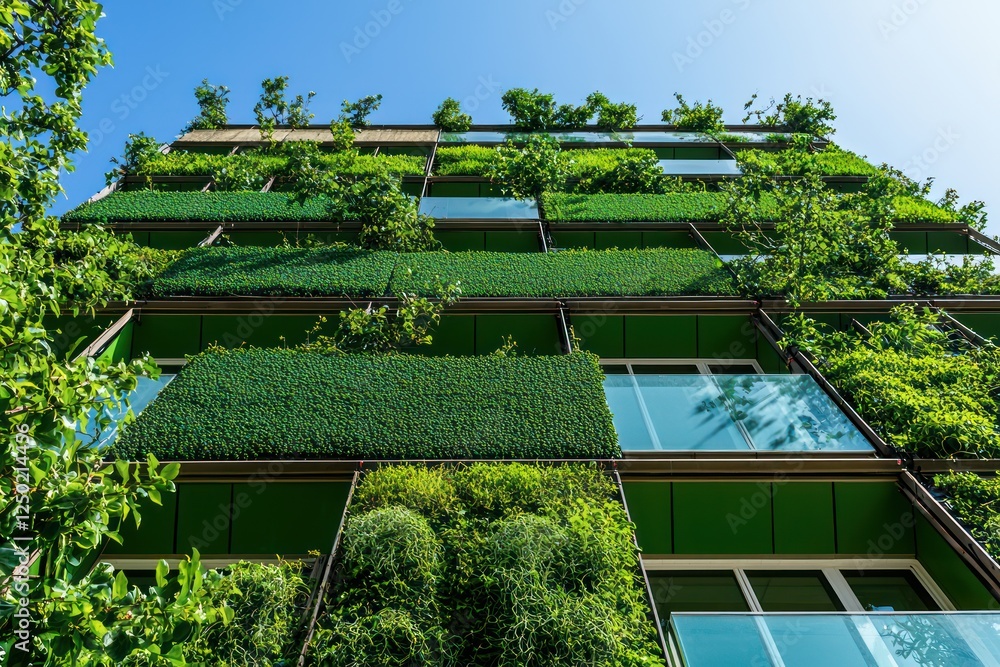
These facades can be installed on new buildings or retrofitted onto existing structures. They range from transparent photobioreactor panels that look like futuristic aquariums to textured moss walls that resemble natural landscapes. The common goal is to transform a building from a passive carbon emitter into an active carbon sink.
Why Urban Carbon Needs New Solutions
Urban carbon emissions come from multiple sources: electricity generation, transportation, industrial activity, and the construction and operation of buildings. Even as renewable energy expands, the sheer density of cities means that carbon dioxide concentrations can remain high. Traditional mitigation strategies such as better insulation, efficient appliances, and rooftop solar panels are essential, but they mostly reduce emissions rather than remove carbon already in the air.
Cities also have limited horizontal space for new forests or parks. Rooftops and facades, however, represent vast unused surface area. A typical high-rise building may have thousands of square meters of exterior wall. If even a fraction of that surface were covered with bioreactive panels, it could capture carbon, cool the building, and filter pollutants. This is why architects, engineers, and urban planners are increasingly looking at the vertical dimension of cities as a climate solution.
How Bioreactive Facades Cut Carbon
Bioreactive facades reduce urban carbon through several overlapping mechanisms. These mechanisms can be grouped into a few key pathways.
A. Photosynthetic carbon sequestration occurs when algae, mosses, or cyanobacteria use sunlight to convert carbon dioxide into biomass. During photosynthesis, carbon dioxide is fixed into organic molecules, and oxygen is released. A well-managed algae facade can capture carbon at rates far higher than many terrestrial plants because algae grow rapidly and can be continuously harvested.
B. Biomass valorization turns captured carbon into useful products. When algae or plant biomass is harvested, it can be processed into biogas, biofertilizer, bioplastics, or animal feed. If that biomass is used to replace fossil-based products, the carbon remains stored or is converted into energy with a lower net emissions profile. In some systems, the biomass is dried and burned for heat, but this must be carefully managed to avoid releasing the captured carbon back into the atmosphere.
C. Microclimate cooling reduces the need for air conditioning. Living facades shade the building envelope and release water vapor through evapotranspiration. This can lower surface temperatures and reduce cooling loads. Because air conditioning is a major source of urban electricity demand, even a modest reduction can translate into significant carbon savings.
D. Air pollutant filtration improves local air quality. Bioreactive surfaces can absorb nitrogen oxides, particulate matter, volatile organic compounds, and ozone. While the carbon impact of pollutant filtration is indirect, cleaner air reduces the demand for mechanical ventilation and supports healthier urban environments.
E. Energy recovery and generation can occur in advanced systems. Some photobioreactor facades capture solar heat that can be used for hot water. Others produce algal biomass that can be converted into biofuel. When integrated with solar panels or heat pumps, bioreactive facades can become part of a building’s energy strategy rather than just an environmental add-on.
F. Embodied carbon reduction can happen when bio-based materials replace carbon-intensive cladding. For example, panels made from algae-derived bioplastics or biocement can lower the upfront carbon footprint of a building. This is a smaller but growing benefit as material science advances.
Main Types of Bioreactive Facade Systems
There is no single design for a bioreactive facade. Different systems suit different climates, budgets, and architectural styles. The following categories are among the most important.
A. Algae photobioreactor facades use transparent panels or tubes filled with water and microalgae. Sunlight passes through the panels, and the algae consume carbon dioxide. These systems can be flat, curved, or arranged as a vertical garden of glass. The BIQ House in Hamburg, Germany, is a famous early example. It uses algae panels to provide shade and generate heat.
B. Moss and bryophyte walls rely on mosses that tolerate low light and high humidity. They are often cheaper and require less technology than algae systems. Moss walls can be very effective at cooling and air filtration, but their carbon capture rate is generally lower than that of algae.
C. Bacterial and biocement skins use microorganisms to precipitate calcium carbonate. This can create self-healing concrete or carbon-capturing coatings. These facades are still emerging, but they promise durable, low-maintenance carbon storage.
D. Hybrid living facades combine multiple organisms and technologies. For example, a facade might include algae panels, moss sections, and photovoltaic cells. Hybrid systems can balance carbon capture, energy generation, and aesthetic variety.
E. Modular cassette systems are prefabricated units that can be attached to existing walls. They are designed for easy maintenance, replacement, and monitoring. Modularity makes bioreactive facades more practical for retrofits and large-scale deployment.
Real-World Examples and Lessons
The BIQ House in Hamburg is often cited as the world’s first building with a bioreactive algae facade. Completed in 2013, it uses 129 algae-filled panels on its south-facing side. The algae provide shade, and the biomass is harvested to produce biogas for heating. The project demonstrated that living facades can work in a real building, though it also revealed challenges related to maintenance and cost.
The Urban Algae Canopy in Milan, designed for Expo 2015, was a striking temporary installation that combined algae, water, and digital control. It showed how bioreactive facades can be both functional and visually dramatic. Other projects, such as algae-powered pavilions and moss-covered office walls, have appeared in Europe, Asia, and North America. Each project adds data about how different species, climates, and building types perform.
These examples teach an important lesson: bioreactive facades are not plug-and-play products. They require careful design, ongoing management, and a willingness to learn from failure. But they also prove that the technology is not science fiction. It is already here, and it is improving.
Carbon Math: What Can Facades Really Deliver?
It is tempting to overstate the carbon benefits of bioreactive facades. The truth is that performance varies widely depending on light, temperature, species, panel design, and maintenance. Some algae panels can capture tens of grams of carbon dioxide per square meter per day under ideal conditions. Others may capture much less in cloudy or cold climates.
A conservative estimate might suggest that one square meter of algae facade can capture between 10 and 100 grams of carbon dioxide per day. Over a year, that is roughly 3.6 to 36 kilograms per square meter. A large building with 1,000 square meters of bioreactive surface could therefore capture several tons of carbon dioxide annually. That is not enough to offset all the emissions of a large office tower, but it is significant. It is comparable to planting hundreds or thousands of trees, and it uses space that would otherwise be inert.
The net carbon benefit also depends on the energy used to pump water, circulate nutrients, and harvest biomass. If that energy comes from fossil fuels, the facade’s climate advantage shrinks. If it comes from renewable sources, the benefit grows. This is why bioreactive facades should be integrated with broader strategies for energy efficiency and clean power.
Economic and Regulatory Drivers

The business case for bioreactive facades is strengthening. Green building certification systems such as LEED, BREEAM, and WELL reward features that improve air quality, reduce energy use, and enhance occupant well-being. Bioreactive facades can contribute to multiple credits, making them attractive to developers seeking certification.
Carbon pricing and carbon credits are also emerging as potential revenue streams. If a building can verify that its facade is capturing and storing carbon, it may be able to sell carbon offsets or receive tax incentives. Green bonds and ESG investment criteria are pushing real estate portfolios toward lower-carbon assets. Bioreactive facades can be part of that story.
There are also direct operational savings. Shading and evaporative cooling can reduce air conditioning bills. Improved air quality can reduce ventilation costs. And the aesthetic value of a living facade can attract tenants and increase property value. In dense cities, where competition for premium space is fierce, a bioreactive facade can be a differentiator.
Challenges and Limitations
Bioreactive facades are promising, but they are not without problems. Honest assessment is essential for scaling them responsibly.
A. Maintenance and contamination are major concerns. Algae systems can be invaded by unwanted microorganisms. Moss walls can dry out or become waterlogged. Regular cleaning, nutrient balancing, and pH control are necessary. This requires trained staff and ongoing budgets.
B. Water and nutrient demand can be high. Algae need water, nitrogen, phosphorus, and trace minerals. In water-scarce cities, this is a serious constraint. Using greywater, rainwater harvesting, and closed-loop nutrient recycling can help, but these systems add complexity.
C. Climate and light variability affect performance. Facades in northern latitudes receive less sunlight in winter. Extreme heat can overheat panels, while freezing temperatures can damage cells. Species selection and thermal management are critical.
D. Cost and structural load remain barriers. Bioreactive facades can cost more than conventional cladding. They also add weight, especially when water is involved. Structural engineers must account for this load, which can increase construction costs.
E. Performance verification is difficult. There is no universal standard for measuring how much carbon a facade captures. Without reliable measurement, reporting, and verification, it is hard to claim carbon credits or compare systems. The industry needs transparent protocols.
F. Fire, electrical, and safety codes must be addressed. Water and electricity in the same facade require careful design. Glass panels must meet safety standards. Building inspectors need clear guidelines. These issues are solvable, but they slow adoption.
G. Aesthetic and social acceptance varies. Some people love the look of a living facade. Others see it as messy or high-maintenance. Designers must engage with communities and building users to ensure support.
Design Principles for Effective Bioreactive Facades
To maximize carbon benefits and minimize problems, designers should follow several principles.
A. Orientation and solar access should be optimized. In the northern hemisphere, south-facing facades receive the most sunlight. In the southern hemisphere, north-facing walls are best. East and west facades can also work but may need different species or shading.
B. Panel geometry and flow should support healthy growth. Algae need light, carbon dioxide, and mixing. Dead zones can cause cell death. Computational fluid dynamics can help design panels that keep water and nutrients moving.
C. Species selection should match the local climate. Native or locally adapted algae and mosses are more likely to survive. Genetically modified organisms may offer higher yields, but they raise regulatory and ethical questions.
D. Integrated monitoring is essential. Sensors for temperature, pH, light, and carbon dioxide can provide real-time data. This allows operators to adjust conditions and detect problems early.
E. Lifecycle planning should begin at the design stage. Who will maintain the facade? How will biomass be harvested? Where will replacement parts come from? A facade that is beautiful on day one but neglected on day one thousand will not deliver carbon benefits.
F. Aesthetic integration matters. Bioreactive facades should not look like lab equipment bolted onto a building. They can be designed as artistic features, social spaces, or educational displays. When people understand and appreciate the living skin, they are more likely to support its maintenance.
The Role of Policy, Planning, and Markets
Government policy can accelerate or slow the adoption of bioreactive facades. Building codes can encourage or require living infrastructure. Zoning rules can allow facade retrofits. Subsidies can reduce upfront costs. Carbon markets can reward verified sequestration.
Cities can also use public procurement to create demand. Schools, libraries, transit stations, and government offices could install bioreactive facades as demonstration projects. These projects would generate data, train workers, and normalize the technology.
Universities and research institutions have a role to play as well. They can develop standardized metrics, test new species, and study long-term performance. Industry partnerships can turn research into commercial products. The field needs collaboration between biologists, architects, engineers, policymakers, and investors.
Future Innovations
The future of bioreactive facades is likely to be more intelligent, more efficient, and more integrated. Artificial intelligence could control nutrient dosing, water flow, and harvesting in real time. Machine learning could predict contamination events before they happen. Synthetic biology could create algae that capture carbon faster or produce high-value compounds.
Self-healing materials could repair cracks and maintain performance over decades. Carbon-negative biocement could replace conventional concrete. Vertical farms could be integrated with facades to produce food and capture carbon at the same time. Data from thousands of facades could be pooled to create a global map of urban carbon capture.
We may also see bioreactive facades become part of the circular economy. Harvested algae could become bioplastics, fertilizers, or animal feed. Waste heat from the facade could warm the building. Rainwater could be collected and reused. The facade would no longer be a static shell but a living system that participates in the building’s metabolism.
Conclusion

Bioreactive facades are not a silver bullet for urban carbon emissions. They cannot offset the entire carbon footprint of a city, and they require careful design, maintenance, and investment. But they represent a powerful shift in how we think about buildings. Instead of treating walls as inert barriers, we can treat them as living surfaces that clean the air, cool the streets, and capture carbon.
As cities grow denser and climate impacts intensify, every square meter of vertical space becomes an opportunity. Bioreactive facades turn that opportunity into action. They combine biology, architecture, and engineering into a single system that works with nature rather than against it. With the right policies, standards, and creative ambition, they can become a common feature of the urban landscape not just in showcase projects, but in schools, offices, apartments, and transit hubs around the world.
The transition to a low-carbon city will require many solutions: renewable energy, efficient transportation, circular materials, and equitable planning. Bioreactive facades belong in that mix. They are a reminder that the built environment can be alive, adaptive, and part of the solution. The buildings of the future may not just consume carbon they may help to heal the atmosphere.