
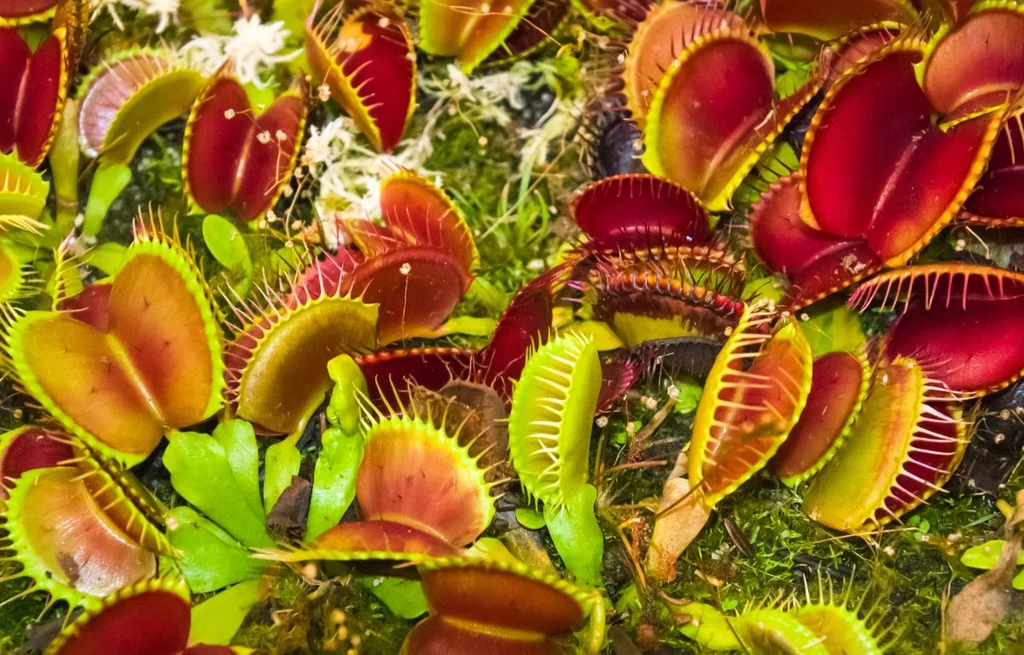
The natural world has long served as an inexhaustible wellspring of inspiration for human innovation. From the aerodynamic efficiency of bird wings to the structural resilience of termite mounds, engineers have consistently turned to nature for solutions to complex technological challenges. Yet among the most unexpected and intellectually fascinating sources of aerospace inspiration lies a humble carnivorous plant: the Venus flytrap. This remarkable organism, scientifically known as Dionaea muscipula, has captivated scientists for centuries with its lightning-fast trapping mechanism, and now it is revolutionizing the way researchers approach aircraft design, particularly in the realm of morphing wings and adaptive structures. The integration of biological principles into engineering—a discipline known as biomimicry or bionics has opened unprecedented avenues for creating more efficient, quieter, and environmentally sustainable aircraft. This article explores the intricate mechanics of the Venus flytrap, the pioneering research translating its snapping action into aviation technology, and the profound implications for the future of flight.
Understanding the Venus Flytrap’s Extraordinary Mechanism
The Anatomy of a Biological Marvel
The Venus flytrap is a small perennial plant native to the subtropical wetlands of the East Coast of the United States, specifically the coastal plains of North and South Carolina. Its most distinctive feature is the pair of hinged lobes at the end of each leaf, which together form a trap capable of capturing insects and small arthropods. Each lobe is lined with sensitive trigger hairs typically three to six on each side that serve as the plant’s sensory system. When an insect brushes against these hairs, it initiates a cascade of physiological events that culminates in the trap snapping shut in a mere fraction of a second, typically around 100 milliseconds.
What makes this mechanism truly extraordinary is that the Venus flytrap accomplishes this rapid movement without muscles, nerves, or any form of centralized control system. Unlike animals, plants lack the specialized contractile tissues that enable locomotion in the animal kingdom. The flytrap’s solution to this biological challenge has profound implications for engineering.
The Physics of Snap-Through Buckling
The secret behind the Venus flytrap’s rapid closure lies in a phenomenon known as snap-through buckling, a form of elastic instability. To understand this concept, one must first appreciate the geometry of the trap’s lobes. Each lobe is not flat but possesses a convex curvature, similar to the surface of a contact lens. This curved shell structure stores elastic potential energy, much like a compressed spring.
When the trap is in its open, ready state, the lobes are in a metastable configuration they are stable, but only marginally so. The plant actively pumps water into the cells on the outer surface of the lobes, creating internal turgor pressure that maintains this delicate balance. This hydraulic system functions analogously to a pressurized hydraulic circuit in engineering, with the plant’s cell walls acting as the containment vessels.
The trigger hairs serve as the activation mechanism. When an insect touches a hair, it generates a small electrical signal that propagates through the plant tissue. Notably, the Venus flytrap employs a “two-touch” mechanism: a single touch is insufficient to trigger closure; a second touch within approximately thirty seconds is required. This biological safeguard prevents the trap from wasting energy on false alarms, such as raindrops or wind-blown debris.
Upon receiving the second stimulus, the plant rapidly changes the pressure distribution within its cells, reducing the internal turgor pressure on the outer surface. This subtle alteration is enough to push the metastable lobes past their critical buckling point. At this threshold, the elastic energy stored in the curved shell is suddenly released, and the lobes snap from their convex configuration to a concave one, closing the trap around the unsuspecting prey. The entire process is a classic example of snap-through instability, where a small perturbation in loading causes a dramatic and rapid transition between two stable states.
Bistability and Energy Storage
The Venus flytrap’s trapping mechanism exemplifies a concept known as bistability the existence of two distinct stable configurations for the same structure. The open state and the closed state are both mechanically stable; the trap does not require continuous energy input to remain in either position. The transition between these states occurs through the release of stored elastic energy, which is accumulated during the opening phase when the plant actively pumps water and deforms its lobes.
This bistable behavior is not unique to the Venus flytrap. In the engineering world, bistable structures can be found in everyday objects such as slap bracelets and toy jumping poppers. However, the Venus flytrap represents one of the most sophisticated natural implementations of this principle, combining bistability with a sensitive triggering mechanism and a hydraulic actuation system that can be reset and reused repeatedly.
From Biology to Engineering: The Birth of PACS Technology
The German Aerospace Center’s Pioneering Research
The translation of the Venus flytrap’s snapping mechanism into aerospace technology began in earnest at the German Aerospace Center (Deutsches Zentrum für Luft- und Raumfahrt, or DLR). Researchers at the DLR Institute of Composite Structures and Adaptive Systems, led by scientists such as Benjamin Gramüller, embarked on a mission to develop a morphing wing trailing edge that could smoothly transform into any desired shape, rendering conventional flaps obsolete.
The motivation for this research was rooted in the inherent inefficiencies of traditional aircraft flap systems. Conventional flaps on commercial airliners are actuated through complex mechanical linkages and, when extended, create gaps between the wing and the flap structure. These gaps disrupt the smooth flow of air over the wing surface, compromising aerodynamic efficiency, increasing fuel consumption, and contributing to in-flight noise. A seamless, morphing trailing edge capable of continuous deformation would eliminate these gaps and their associated penalties.
The PACS Concept: Pressure-Actuated Cellular Structures
The solution that emerged from this research is known as PACS Pressure-Actuated Cellular Structures. As the name suggests, PACS is a technology that mimics the hydraulic actuation mechanism of the Venus flytrap by using pressurized fluid (in this case, compressed air) to deform a cellular structure.
The PACS concept involves arranging plastic cells of varying sizes in two layers, one stacked atop the other. The geometry and dimensions of these cells are meticulously designed to produce specific deformation patterns when pressure is applied. To raise the trailing edge of the wing, the lower cell layer is pressurized; to lower it, the upper layer is pressurized. This bidirectional actuation enables the wing surface to assume a continuous range of aerodynamic shapes, from a nearly flat cruise configuration to a highly cambered landing configuration.
The beauty of the PACS approach lies in its simplicity and elegance. The compressed air required for actuation can be supplied from the aircraft’s existing pneumatic systems, eliminating the need for heavy hydraulic reservoirs or complex mechanical actuators. The cellular structure distributes loads evenly across the wing surface, reducing stress concentrations and potentially extending the fatigue life of the components. Moreover, because the structure is composed of discrete cells, localized damage does not necessarily compromise the entire system a significant advantage for safety-critical aerospace applications.
Demonstrator and Experimental Validation
The DLR researchers successfully constructed the world’s first PACS flap demonstrator, which demonstrated the feasibility of the concept in laboratory conditions. Using the new flight technology, they were able to achieve the desired flap shapes for both take-off and landing by controlling the application of compressed air. The aircraft was able to maintain itself in the air at low speeds such as during landing thanks to the increased lift coefficient generated by the extended flaps, which increase the curvature of the wings during slow flight and compensate for the loss of speed.
The PACS research project was carried out in conjunction with Airbus Defence and Space, signaling strong industry interest in the technology’s potential for commercial applications. The next phase of development involves testing the new flap technology in wind tunnel conditions to validate its performance under realistic aerodynamic loads.
Foldable Wingtips: Extending the Biomimetic Paradigm

The Challenge of Long Wings
While the PACS technology addresses the trailing edge of the wing, another line of research has focused on a different aerodynamic challenge: the wingtips. Longer aircraft wings offer significant aerodynamic advantages because they reduce induced drag, which is a major contributor to fuel consumption. Induced drag arises from the generation of lift and is particularly pronounced at the wingtips, where high-pressure air from beneath the wing tends to flow around the tip to the low-pressure region above.
However, longer wings present practical problems on the ground. Aircraft with extended wingspans encounter spatial limitations at airports, including restrictions on taxiways, gate areas, and hangar space. This fundamental conflict between aerodynamic efficiency in flight and logistical practicality on the ground has driven interest in foldable wingtip technologies.
Learning from Nature’s Hydraulic System
The Venus flytrap once again provided the conceptual foundation for a solution. An interdisciplinary research team from TU Braunschweig and TU Dresden, comprising researchers Patrick Meyer and Michael Vorhof, developed freely movable wingtips made of fibre composite materials manufactured using innovative 3D weaving technology. Their work was recognized with the Peter Dornier Foundation Prize 2025, awarded in mid-July for this novel combination of textile technology, aviation, and bionics.
The core insight driving this research is that the Venus flytrap operates essentially like a hydraulic system. When an insect falls into the trap, the plant closes its leaves in a fraction of a second by specifically changing the pressure in the cell walls. These so-called nastic movements form the basis of the PACS technology, which Meyer describes as “basically a technical replica of the mechanics of the Venus flytrap” with precisely the properties that robust yet easily movable wingtips require.
3D Weaving: A Manufacturing Breakthrough
To transfer the complex structure and mechanics of the Venus flytrap into a woven and movable wingtip capable of bending through pressure changes, textile researcher Michael Vorhof employed a weaving machine from the machine and plant manufacturer Lindauer DORNIER. The woven semi-finished products consist of glass fibre and polyamide threads, which are melted in a thermal press to form fibre-reinforced plastic components. According to Vorhof, this process is significantly cheaper than using an autoclave, the traditional method for curing composite materials.
The resulting wingtip structure is a sophisticated integration of textile engineering and biomimetic design. The fibre architecture is carefully arranged to replicate the anisotropic properties of the Venus flytrap’s cell walls, enabling the structure to deform in controlled ways when pressure is applied. Aeroelastic analyses on a model of a Cessna Citation have demonstrated that the nature-inspired woven lightweight wingtip can withstand the loads acting on it during flight and can be raised and lowered in seconds.
Multifunctional Control Surfaces
Beyond simply folding for ground operations, the PACS-based wingtips offer the potential for continuous shape morphing during flight. By using pressure-controlled actuators with adjustable mechanical properties, wingtips could become multifunctional control surfaces capable of actively adjusting their geometry to optimize aerodynamic performance across different flight conditions. This capability could contribute to improved fuel efficiency, reduced emissions, and enhanced flight control responsiveness.
The Broader Implications for Aviation
Enhanced Aerodynamic Efficiency
The integration of Venus flytrap-inspired technologies into aircraft design promises substantial improvements in aerodynamic efficiency. By eliminating the gaps and discontinuities associated with conventional flaps, morphing trailing edges reduce drag and minimize noise generation. The ability to continuously adjust wing camber and wingtip geometry allows the aircraft to maintain optimal aerodynamic configurations throughout all phases of flight, from take-off through cruise to landing.
The reduction in drag translates directly into lower fuel consumption, which is both an economic and environmental benefit. The aviation industry is under increasing pressure to reduce its carbon footprint, and biomimetic technologies offer a pathway toward more sustainable air travel. The PACS-based foldable wingtips, in particular, enable the use of longer wingspans which inherently reduce induced drag without the ground-handling penalties that would otherwise make such designs impractical.
A Quiet Revolution in Aircraft Noise
Aircraft noise is a significant concern for communities near airports and a major constraint on airport operations. The gaps created when conventional flaps are extended are a primary source of aerodynamic noise, as turbulent air flows through and around these discontinuities. By providing a seamless, gap-free morphing surface, PACS technology has the potential to significantly reduce flap-related noise, contributing to quieter aircraft operations and improved quality of life for airport neighbors.
Certification and Safety Considerations
As with any new aerospace technology, the certification of biomimetic structures will require rigorous validation to meet the stringent safety standards of aviation authorities such as the Federal Aviation Administration (FAA) and the European Union Aviation Safety Agency (EASA). The PACS concept offers some inherent safety advantages: because the structure is composed of multiple independent cells, failure of a single cell does not necessarily lead to catastrophic failure of the entire system. The use of compressed air as the actuation medium, rather than flammable hydraulic fluid, also reduces fire risk. Nevertheless, extensive testing and analysis will be necessary to demonstrate compliance with damage tolerance and fatigue requirements.
Beyond Aviation: Broader Applications of Snap-Through Technology
Robotics and Soft Machines
The principles underlying the Venus flytrap’s snapping mechanism are finding applications beyond aerospace. Researchers have developed flytrap-inspired robots that exploit bistable structures to achieve rapid, energy-efficient movements. These robots can snap from one configuration to another in milliseconds, enabling capabilities such as rapid grasping, jumping, and perching. A particularly innovative application is a perching drone inspired by the prey-capturing mechanism of the Venus flytrap, which utilizes an active flexible perching mechanism to achieve perching in less than 100 milliseconds.
Deployable Structures and Space Applications
The snap-through buckling principle is also being explored for deployable structures in space applications. Satellites and spacecraft often require large antennas, solar arrays, or other appendages that must be stowed compactly during launch and deployed reliably in orbit. Bistable structures offer a compelling solution: they can be folded into a compact configuration for launch and then snapped into their deployed state with a single actuation event, eliminating the need for complex and failure-prone deployment mechanisms. Research has specifically examined the use of Venus flytrap-inspired bistable structures for the deployment of aerospace systems.
Programmable Materials and Metamaterials
Physicist Christian Santangelo at the University of Massachusetts Amherst has developed a technique using curved creases to give thin curved shells a fast, programmable snapping motion. This approach avoids the need for complicated materials and fabrication methods when creating structures with fast dynamics. As Santangelo explains, “A lot of plants and animals take advantage of elasticity to move rapidly, yet we haven’t really known how to use this in artificial devices. This gives us a way of using geometry to design ultra-fast, mechanical switches that can be used, for example, in robots”.
Conclusion: Nature as the Ultimate Engineer

The Venus flytrap, a modest carnivorous plant from the wetlands of the American Southeast, has emerged as an unlikely but profoundly influential muse for aerospace engineers. Its lightning-fast trapping mechanism, powered by snap-through buckling and hydraulic pressure, has inspired technologies that promise to transform aircraft design making wings more efficient, flights quieter, and aviation more sustainable.
The PACS technology developed at the German Aerospace Center and the foldable wingtips pioneered at TU Braunschweig and TU Dresden represent significant milestones in the field of biomimicry. They demonstrate that the solutions honed by millions of years of evolution can be translated into engineering systems that surpass the capabilities of conventional designs. As researchers continue to explore the interface between biology and technology, the Venus flytrap will undoubtedly remain a source of inspiration, reminding us that some of the most elegant solutions to complex engineering problems may already exist in the natural world, waiting to be discovered.
The future of aviation may well be shaped by lessons learned from a plant that catches flies a testament to the power of interdisciplinary thinking and the enduring value of looking to nature for answers.