

The intersection of business operations and environmental stewardship has undergone a remarkable transformation in recent years. What was once a niche concern relegated to corporate social responsibility reports has now become a central pillar of strategic decision-making across industries. The nature risk platform landscape has experienced unprecedented growth, evolving from rudimentary assessment tools into sophisticated frameworks that rival the maturity of climate risk management systems.
This rapid maturation reflects a broader recognition that biodiversity loss, ecosystem degradation, and natural capital depletion pose material financial risks to businesses worldwide. According to recent industry analyses, more than 500 organizations have already adopted emerging nature-related disclosure frameworks, signaling a fundamental shift in how corporations perceive and manage their relationship with the natural world【6†L1-L5】. The momentum is undeniable, yet questions remain about whether these platforms can deliver the depth and reliability that investors and regulators increasingly demand.
Understanding Nature Risk: Beyond Climate Change
For years, climate risk dominated sustainability discussions, with carbon accounting, emission reduction targets, and climate scenario analysis becoming standard corporate practices. However, nature risk encompasses a far broader spectrum of environmental considerations that traditional climate frameworks fail to capture adequately.
Nature-related risks can be categorized into three primary dimensions:
A. Physical risks arising from ecosystem degradation, including biodiversity loss, deforestation, water scarcity, and soil depletion that directly impact operational capacity and supply chain resilience.
B. Transition risks stemming from policy changes, regulatory requirements, technological shifts, and market preferences as economies move toward nature-positive practices.
C. Systemic risks emerging from the interconnected nature of ecosystems, where disruptions in one region can cascade across global supply networks and financial markets.
The Taskforce on Nature-related Financial Disclosures (TNFD) has been instrumental in establishing a coherent framework for identifying, assessing, and reporting these risks【6†L9-L15】. Unlike climate frameworks that have had decades to mature, nature risk assessment tools have had to accelerate their development dramatically to meet growing stakeholder expectations.
The TNFD Framework: A Foundation for Maturity
Origins and Development Timeline
The TNFD emerged from recognition that the Task Force on Climate-related Financial Disclosures (TCFD) provided an inadequate template for addressing the complexity of nature-related issues. Established in 2021, the TNFD released its final recommendations in September 2023, representing a remarkable compression of development timelines compared to its climate counterpart【6†L9-L15】.
The framework’s rapid finalization reflects both the urgency of the biodiversity crisis and the willingness of financial institutions to engage with nature risk proactively. Over 500 companies have committed to adopting TNFD-aligned disclosures, with early adopters spanning multiple sectors including financial services, agriculture, mining, and energy【6†L9-L15】.
Core Components of the TNFD Framework
The TNFD framework provides comprehensive guidance for organizations seeking to assess and disclose nature-related dependencies, impacts, risks, and opportunities. Key components include:
A. The LEAP Approach – A structured methodology guiding organizations through Locate, Evaluate, Assess, and Prepare phases to systematically identify nature-related issues.
B. Sector-Specific Guidance – Tailored recommendations for high-impact sectors including food and agriculture, mining, energy, and financial services.
C. Metrics and Targets – A comprehensive set of indicators enabling organizations to measure their nature-related performance and set meaningful targets.
D. Scenario Analysis Tools – Resources for exploring how different nature-related scenarios might affect business operations and strategic planning.
The LEAP framework is particularly noteworthy because it provides a systematic and replicable process that companies can apply across different geographical contexts and operational scales【6†L12-L15】. This methodology bridges the gap between broad principles and practical implementation, enabling organizations to move from awareness to action.
Platform Development: From Concept to Implementation
The Technological Infrastructure
Modern nature risk platforms integrate diverse data sources, including satellite imagery, ground-level sensors, scientific databases, and corporate supply chain information. This technological infrastructure enables organizations to visualize their nature-related dependencies and impacts across complex global operations.
Sophisticated platforms now offer capabilities that would have seemed impossible just a few years ago:
A. Geospatial Analysis – Mapping corporate assets and supply chains against biodiversity hotspots, protected areas, and ecosystem service provision maps.
B. Supply Chain Tracing – Tracking commodities from source to final product to identify nature-related risks at each stage of production.
C. Scenario Modeling – Simulating how different environmental changes might affect business operations under various future scenarios.
D. Real-Time Monitoring – Continuous tracking of environmental indicators enabling early warning of emerging nature-related risks.
Integration with Existing Systems
The maturation of nature risk platforms is evidenced by their increasing integration with established corporate systems. Leading platforms now connect with enterprise resource planning software, supply chain management systems, and financial reporting tools, embedding nature considerations into routine business processes rather than treating them as standalone exercises.
This integration represents a critical milestone in platform maturity. When nature risk assessment becomes embedded in procurement decisions, investment evaluations, and strategic planning processes, it transitions from a compliance exercise to a value-creating activity. According to industry assessments, organizations that have successfully integrated nature risk considerations report improved supply chain resilience, enhanced stakeholder relationships, and better access to sustainable finance【7†L2-L6】.
Major Platform Providers and Approaches
The nature risk platform ecosystem has diversified significantly, with different providers offering distinct approaches tailored to various organizational needs and contexts.
Comprehensive Enterprise Platforms
Large-scale platforms designed for multinational corporations offer extensive capabilities for assessing nature-related risks across complex global operations. These platforms typically feature:
A. Global Data Coverage – Comprehensive datasets covering biodiversity, ecosystem services, and natural capital across all major regions.
B. Multi-Sector Capabilities – Frameworks and metrics applicable across diverse industries and operational contexts.
C. Enterprise Integration – Seamless connection with existing corporate systems and workflows.
D. Scalable Assessment – Ability to assess nature risk at portfolio, asset, and project levels.
Specialized Assessment Tools
More focused platforms address specific nature-related challenges, offering depth rather than breadth. These specialized tools excel in areas such as:
A. Deforestation-Free Supply Chains – Tools for verifying that commodities meet deforestation-free commitments.
B. Water Risk Assessment – Detailed analysis of water availability, quality, and regulatory risks at watershed level.
C. Biodiversity Impact Measurement – Frameworks for quantifying corporate impacts on species and habitats.
D. Ecosystem Service Valuation – Methods for assigning economic value to nature’s contributions to business operations.
Open-Source and Collaborative Initiatives
Recognizing that nature risk assessment requires collective action, several open-source and collaborative platforms have emerged. These initiatives pool data, methodologies, and resources to accelerate platform development and reduce barriers to adoption.
The TNFD itself functions as a collaborative initiative, bringing together financial institutions, corporations, academic institutions, and civil society organizations to develop and refine nature risk assessment approaches【6†L9-L15】. This collaborative model has enabled rapid iteration and improvement, addressing criticisms that early nature risk tools lacked scientific rigor or practical applicability.
Corporate Adoption: Patterns and Drivers
Early Adopters and Their Motivations
Organizations that have embraced nature risk platforms early cite multiple motivations for their engagement:
A. Investor Pressure – Growing expectations from institutional investors that portfolio companies demonstrate awareness and management of nature-related risks.
B. Regulatory Anticipation – Proactive preparation for emerging mandatory disclosure requirements in jurisdictions worldwide.
C. Operational Resilience – Recognition that nature-related disruptions pose material threats to supply chains and operations.
D. Competitive Advantage – Positioning as sustainability leaders to attract customers, employees, and partners.
E. Access to Capital – Meeting requirements for sustainability-linked financing and green bond issuance.
The financial sector has been particularly active in adopting nature risk platforms, with major banks, asset managers, and insurance companies integrating nature considerations into their risk assessment and investment processes. This financial sector engagement is crucial because it signals to the broader corporate community that nature risk assessment is becoming a baseline expectation rather than an optional enhancement.
Implementation Challenges
Despite rapid platform maturation, organizations continue to face significant implementation challenges:
A. Data Availability and Quality – Limited availability of high-quality, locally relevant data on biodiversity and ecosystem services in many regions.
B. Methodological Complexity – Difficulty in translating ecological concepts into metrics that are meaningful for business decision-making.
C. Internal Capability Gaps – Shortage of personnel with expertise in both business operations and environmental science.
D. Cost Considerations – Investment required for platform adoption, data acquisition, and ongoing assessment activities.
E. Attribution Difficulties – Challenges in attributing specific impacts to individual organizations when operating in complex, shared landscapes.
The Maturation Trajectory: Progress and Remaining Gaps

Advances in Platform Capability
Nature risk platforms have made remarkable progress in several key areas:
A. Standardization – The TNFD framework and related initiatives have established common definitions, metrics, and reporting structures, enabling comparison across organizations.
B. Scientific Rigor – Platforms increasingly incorporate peer-reviewed scientific data and methodologies, enhancing credibility and reliability.
C. User Experience – Interfaces and workflows have become more intuitive, reducing barriers to adoption for non-specialist users.
D. Integration – Platforms increasingly connect with climate risk assessment, enabling holistic environmental risk management.
E. Assurance Readiness – Platforms now generate outputs suitable for third-party verification, supporting credibility with stakeholders.
Persistent Limitations
Despite progress, significant gaps remain in nature risk platform capabilities:
A. Spatial Resolution – Many platforms lack the granularity needed for meaningful assessment at specific project locations.
B. Temporal Dynamics – Current tools struggle to capture how nature-related risks might evolve over time.
C. Cumulative Impacts – Limited ability to assess how multiple organizations’ impacts combine to affect ecosystems.
D. Indirect Impacts – Difficulty in capturing nature risks arising from supply chain relationships beyond first-tier suppliers.
E. Valuation Methodologies – Ongoing debate about appropriate approaches for monetizing nature-related dependencies and impacts.
Future Directions: Emerging Trends and Developments
Integration with Climate Risk Frameworks
The convergence of nature and climate risk assessment represents one of the most significant trends in platform development. Organizations increasingly seek integrated platforms that address both environmental dimensions simultaneously, recognizing the deep interconnections between climate change and biodiversity loss.
This integration offers practical benefits including reduced assessment burden, more holistic risk identification, and identification of synergistic solutions. For example, forest conservation projects simultaneously sequester carbon and protect biodiversity, creating both climate and nature benefits.
Regulatory Developments
Regulatory requirements for nature-related disclosure are expanding rapidly. The European Union’s Corporate Sustainability Reporting Directive includes biodiversity and ecosystem considerations, while jurisdictions worldwide are developing their own requirements. Nature risk platforms are evolving to align with these regulatory frameworks, ensuring that corporate disclosures meet compliance obligations while providing decision-useful information.
Technological Innovation
Emerging technologies are expanding platform capabilities:
A. Artificial Intelligence – Machine learning algorithms for analyzing satellite imagery and predicting biodiversity patterns.
B. Blockchain – Distributed ledger technology for supply chain tracing and verification.
C. Internet of Things – Sensor networks providing real-time environmental monitoring.
D. Digital Twins – Virtual representations of physical ecosystems enabling scenario simulation.
Deepening Financial Sector Engagement
The financial sector’s engagement with nature risk is expected to deepen significantly. Banks are incorporating nature risk into lending decisions, insurers are developing nature-related products, and investors are creating nature-focused funds. This financial sector evolution will drive further platform maturation as providers respond to financial institution requirements.
Practical Guidance for Organizations
Starting the Nature Risk Journey
Organizations beginning their nature risk assessment journey should consider the following steps:
A. Conduct Preliminary Assessment – Use screening tools to identify priority locations, commodities, and business activities with potential nature-related issues.
B. Engage Stakeholders – Consult with internal and external stakeholders to understand expectations and identify material nature-related concerns.
C. Select Appropriate Platform – Evaluate available platforms based on organizational needs, resources, and strategic priorities.
D. Build Internal Capacity – Invest in training and capability development to ensure effective platform utilization.
E. Integrate into Decision-Making – Embed nature risk considerations into governance, strategy, and operational processes.
Maximizing Platform Value
Organizations can maximize the value derived from nature risk platforms by:
A. Setting Clear Objectives – Defining what the organization aims to achieve through nature risk assessment.
B. Ensuring Data Quality – Investing in accurate, current data as the foundation for meaningful assessment.
C. Engaging Leadership – Securing executive sponsorship to drive organizational commitment and resource allocation.
D. Collaborating with Peers – Participating in industry initiatives to share knowledge and address common challenges.
E. Communicating Transparently – Reporting nature-related information in ways that are useful to investors and other stakeholders.
Conclusion: A Trajectory of Continued Maturation
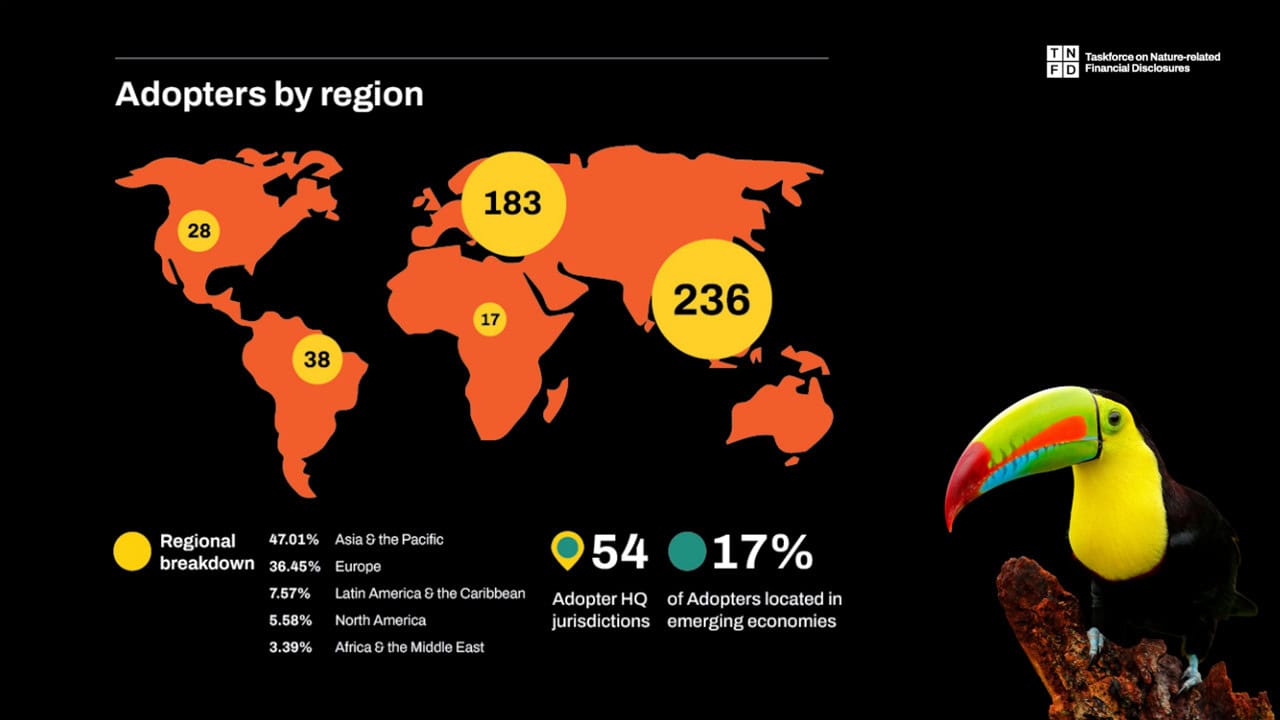
The nature risk platform landscape has matured remarkably quickly, compressing into a few years developments that took decades in climate risk management. The TNFD framework provides a solid foundation, over 500 organizations have committed to adoption, and platform capabilities continue to expand rapidly【6†L1-L5】【6†L9-L15】.
However, maturation is not complete. Significant challenges remain in data availability, methodological rigor, and practical implementation. Organizations must navigate these challenges while preparing for an era in which nature-related disclosure is likely to become as routine as climate reporting.
The trajectory is clear: nature risk platforms will continue to mature, becoming more sophisticated, more integrated, and more essential to corporate strategy. Organizations that engage proactively with this evolution will be better positioned to manage risks, capture opportunities, and contribute to a nature-positive future. The platform maturation that has occurred so rapidly in recent years represents not an endpoint but a waypoint on a continuing journey toward comprehensive environmental risk management.